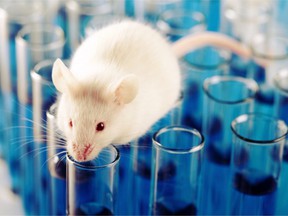

New mice research out of the University of Sydney indicates three rare cannabinoids may have a role to play in decreasing seizures among those with an intractable form of childhood epilepsy.
However, investigators say the unregulated artisanal cannabis-based products currently being used to treat children with intractable epilepsies often contain both low doses of CBD and other phytocannabinoids.
It was that situation that got them thinking about the possibility that “other cannabis constituents might have anticonvulsant properties,” study authors wrote of the study published this summer in the British Journal of Pharmacology,
To gain a firmer understanding, investigators used a mouse model of Dravet syndrome to explore phytocannabinoids with anticonvulsant effects against hyperthermia-induced seizures.
Their initial screening showed that the acidic cannabinoids CBGA, cannabidivarinic acid (CBDVA) and cannabigerovarinic acid (CBGVA) had “novel anticonvulsant properties.”
But Associate Professor Jonathon Arnold
Read full article on The Growth Op